
 admin
admin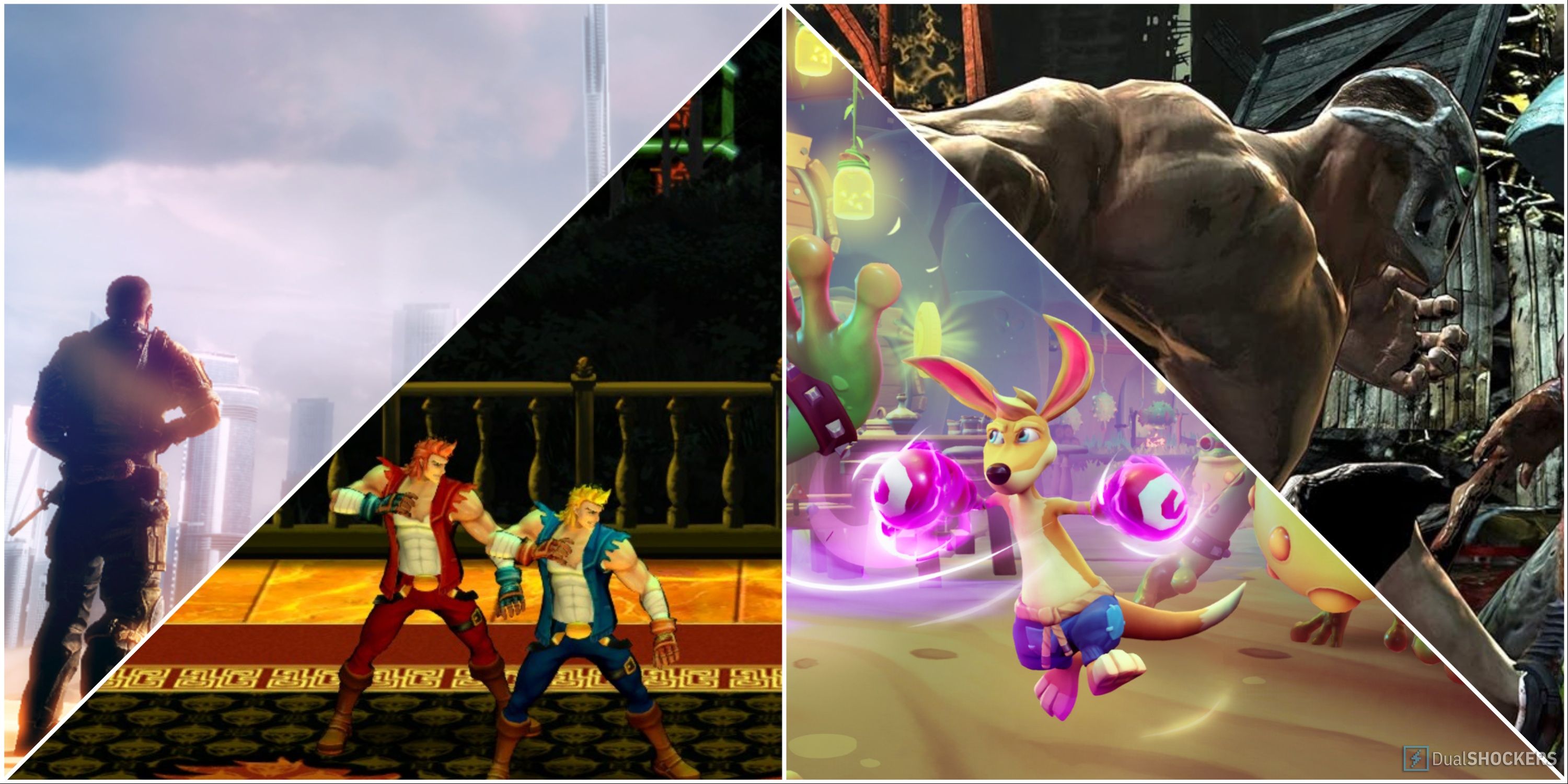
Reboots have been in vogue across all forms of media for several decades now. For video games specifically, there almost always seem to be developers both new and old attempting to reinvent their older IPs for the modern era.
Related
10 Video Game Franchises That Need A Reboot
We want these games BACK!
Results in these endeavors… vary, to put it politely. Sometimes, things really were just fine the first time around and didn’t need to be reinvented. Even if some reboots don’t quite set the world on fire like their origins did, that doesn’t make them bad games.
There are a few reboots out there that didn’t get the biggest reception from fans or studios but still manage to be fun times in their own right.
9 Blaster Master Zero
Compact Vania

Blaster Master (no relation to the Mad Max character) is a Sunsoft-developed sidescrolling shooter from the NES era. The game was well-liked in its time, but as it received sequels, it gradually faded into obscurity.
It got one reboot for WiiWare in 2010, which didn’t do it any favors, but they went around again with Blaster Master Zero in 2017.
Zero plays like a more modernized version of the original game. You can freely explore large, cavernous areas in your tank, blasting beasties as you go, as well as hop out and explore small passages on foot.
It’s kind of like a midpoint between a traditional action game and a Metroidvania, with a bit of nonlinear exploration in each area.
The reception was positive but mild. There have been three Blaster Master Zero games to date, but as of writing, none of them have cracked 1,000 user reviews on Steam. It’s a good game, and people know it’s a good game; it’s just that not enough people know it’s a good game.
8 Double Dragon Neon
Brawlin’ In The 80s

Double Dragon Neon
- Released
- September 11, 2012
As one of the archetypal beat ‘em up games, Double Dragon has come and gone from the public eye many times over the years, getting rebooted nearly every time it reappears. Arguably, though, the game that dragged the whole franchise back from the brink of obscurity was Double Dragon Neon.
Not only was this game an excellent old-school brawler, but it was a delightful parody of both Double Dragon itself and classic arcade gaming.
The whole thing is presented with a layer of 80s-flavored cheese, including spiky hairdos, synth music, and neon lightning, though your combat prowess also unlocks new and better special attacks and abilities.
No Double Dragon game has been quite as silly since Neon, unfortunately. Its spirit still lives on in the River City Girls games, in which both the Lee brothers and Skullmageddon appear, but it’s not quite the same.
7 King’s Quest (2015)
The Graham We Never Knew

Sierra’s long-loved series of point-and-click adventure games, King’s Quest, went dormant after the release of the eighth game in 1998. There were various attempts at new projects here and there over the subsequent years, but nothing actually managed to manifest until 2015.
The 2015 King’s Quest is a five-episode adventure game following Graham before his days as King of Daventry, starting as a wayward youth and gradually working his way forward.
It’s not quite the same kind of game as the originals – not everything’s trying to kill you, for one thing – but it’s still a very charming story.
Not unlike Telltale’s games, this game also has divergent storytelling, with the actions you have Graham take incurring rippling consequences across subsequent episodes. It’s interesting seeing Graham from a more fleshed-out perspective than just “handsome problem-solving king.”
6 Kao The Kangaroo (2022)
The Lost Mascot Platformer

Kao the Kangaroo was a forgotten 3D mascot platformer from the early 2000s, with its second game in particular achieving a small, yet healthy cult status.
It managed to get some fresh eyes in the late 2010s with updated Steam ports that went for like two bucks a pop, enough of which apparently warranted an entirely new game.
The 2022 Kao the Kangaroo reboot attempts to bring the game more in line with modern sensibilities, more Crash 4 than Crash 1.
Besides all the usual running and jumping, Kao’s gloves can be enhanced with various magical abilities, changing how he fights and moves.
It’s still a bit of a cheap production, not unlike the original games, and it definitely won’t unseat the platforming greats any time soon. All the same, if you like mascot platformers and don’t mind a little jank, it’s a fun time.
5 Punch-Out (2009)
More Mac, Please

Punch-Out!!

- Released
- May 18, 2009
- ESRB
- e
- How Long To Beat
- 5 Hours
Despite being one of Nintendo’s oldest franchises, Punch-Out has only had three games (four if you count the original arcade cabinet). The first home release was on the NES, followed by Super Punch-Out for the SNES, and then a whole lot of nothing until the reboot in 2009.

Related
Super Punch-Out’s Secret Multiplayer Would’ve Been a Great ‘Invasion’ Mode
Every game could use a little invadin’
The 2009 game, released for the Wii, was an excellent game that both perfectly captured the strategic boxing vibe of the originals while mixing in lots of cool new mechanics and twists. Nearly all of the opponent boxers are from the original home games, but after you beat them all, you get to face remixed versions with entirely new movesets.
Punch-Out did fine for itself, sales and reception-wise, which is why it’s kind of baffling that we haven’t had any more Punch-Out in the decade-plus since then. Rather than a game that is underrated by players, it seems to be underrated by its creators.
4 Spec Ops: The Line
You Are Not A Hero

Spec Ops was originally a series of fairly generic tactical war shooters, starting with 1998’s Spec Ops: Rangers Lead the Way. It wasn’t a bad series, but it didn’t do anything particularly noteworthy, certainly not enough to stand out against the likes of Call of Duty.
The series stalled out in 2002 but returned with a major tone shift in its 2012 reboot, Spec Ops: The Line. It still looks like a generic war shooter on the surface and was likely written off by many for that exact reason. The combat is functional if uncomplicated, beyond an occasional opportunity to shoot out a window to release a wave of sand.
However, without giving anything away, this game is actually a massive deconstruction of war shooters and military heroism as a whole, with some plot beats that we can best describe as “gut-wrenching.”
Even if you don’t usually like war shooters, it absolutely deserves to be experienced for its phenomenal storytelling.
3 Splatterhouse (2010)
Gloriously Gory

Splatterhouse was a horror-themed sidescrolling beat ‘em up released for arcades and home consoles like the Turbografx-16 in the late 80s. It got a couple of sequels in the early 90s, but went dormant afterward until it received a complete reboot and reimagining in 2010.
The reboot is still a beat ‘em up, 3D instead of 2D, but with a much greater emphasis on damage management. Specifically, both you and your foes can be dismembered with sufficient damage.
Not only can you use your own severed arm as a bludgeon, though, you can shoot out tendrils to siphon health from enemies and regrow your bits.
It wasn’t a perfect game; the difficulty scaling was a bit wacked, and the controls were finicky. It had an excellent presentation, though, thanks in large part to a hilariously irreverent performance from Jim Cummings as the Terror Mask.
2 Return To Castle Wolfenstein
Old-School Nazi-Busting

When you think of Wolfenstein and reboots, the first thing that comes to mind is probably Wolfenstein: The New Order.
Technically, though, that was a reboot of a reboot, and it definitely isn’t underrated; it did just fine for itself. Rather, what’s more underrated is Wolfenstein’s first attempt at a reboot, 2001’s Return to Castle Wolfenstein.
Unlike the much more serious tones of New Order, Return to Castle Wolfenstein still goes whole-hog with the original series’ mildly ridiculous premise of World War II-era Nazis empowered by super science and ancient, forbidden magics instead of just super science.
It’s a one-man-army style of shooter, allowing you to take either the subtle approach of blast away with a variety of both era-appropriate weaponry or ridiculous gadgets like Tesla guns. There’s also ghosts, zombies, and cyborgs to contend with in addition to rank and file Nazis.
1 DmC: Devil May Cry
Should’ve Had A Different Name

Ah, poor DmC: Devil May Cry. Your only crime was the name you were born with. We couldn’t say for certain what prompted this reboot, but it was such a massive departure in tone and story that longtime fans weren’t having it.
When compared to the rest of the Devil May Cry games, DmC is missing that distinctive special sauce, a combination of delicious cheese and over-the-top action.
In a vacuum, though, DmC is actually a very good character-action game. It’s got a fun combat system, lots of weapons to tool around with, some excellent boss fights and set pieces, and all the other ingredients that make this kind of game fun.
Its only real problem was that they called it “Devil May Cry” and tried to sell us on an edgier Dante. If it was called “Demon Shooty Man” and its protagonist was named “Greg,” it probably would’ve been more warmly received.

Next
10 Game Franchises With Hugely Successful Reboots
With different stories, mechanics, or styles, these entries changed their series for the better.
