
 admin
Automating Music Transcription
In recent years, the field of music transcription has witnessed a transformative revolution with the advent of transformer-based models. Originally developed for natural language processing tasks, transformers have emerged as powerful tools for automating the transcription of music, enabling researchers and developers to analyze and notate audio recordings with unprecedented accuracy and efficiency.
At the heart of transformer-based music transcription lies the Transformer architecture, a deep learning model renowned for its ability to capture complex hierarchical structures and long-range dependencies within sequential data. Unlike traditional sequence-to-sequence models, transformers leverage self-attention mechanisms to weigh the importance of different input elements, allowing them to process information in parallel and capture nuanced relationships between individual data points.
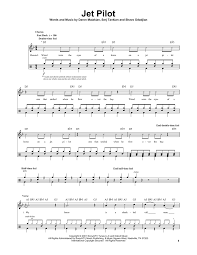
One of the key advantages of transformer-based music transcription is its ability to handle polyphonic audio recordings with multiple simultaneous sounds or voices. By modeling the interactions between different musical elements, transformers can discern overlapping notes, harmonies, and rhythms within audio signals, enabling them to transcribe complex musical passages with remarkable accuracy and fidelity.
https://tartalover.net/nicole-pesce
Automating Music Transcription With Transformers
The transformer-based approach to music transcription typically involves several stages, each designed to extract and analyze different aspects of the audio signal. In the initial stage, the audio signal is divided into short segments or frames, which are then transformed into spectrograms or other time-frequency representations that capture the underlying acoustic characteristics of the sound.
Next, the transformer model processes these spectrogram representations, employing self-attention mechanisms to identify salient features, patterns, and structures within the audio data. By attending to relevant information across multiple time steps, the model can infer the presence of individual notes, chords, and musical phrases, enabling it to generate accurate transcriptions of the original performance.
https://m.youtube.com/@tartalover2682/videos
One of the key challenges in automating music transcription with transformers lies in training the model on large-scale datasets of annotated audio recordings. These datasets provide the model with examples of how different musical elements correspond to specific patterns in the audio signal, allowing it to learn the underlying relationships between input and output data.
To facilitate the training process, researchers and developers often employ transfer learning techniques, pretraining the transformer model on general-purpose audio datasets before fine-tuning it on task-specific transcription tasks. This approach enables the model to leverage knowledge learned from diverse audio sources, enhancing its ability to generalize to new musical contexts and styles.
The benefits of automating music transcription with transformers extend far beyond traditional transcription tasks. In addition to generating accurate notations of audio recordings, transformer-based models can also be used for a wide range of music analysis and synthesis tasks, including instrument recognition, music generation, and audio source separation.
By combining transformer-based transcription with other advanced audio processing techniques, researchers and developers can unlock new possibilities for exploring and understanding music in all its richness and complexity. From analyzing the stylistic characteristics of different musical genres to uncovering hidden patterns and structures within audio recordings, transformer-based models offer a versatile and powerful toolkit for advancing our knowledge and appreciation of music.
In conclusion, automating music transcription with transformers represents a paradigm shift in the field of audio analysis and notation. By harnessing the power of deep learning and self-attention mechanisms, transformer-based models enable researchers and developers to transcribe, analyze, and synthesize music with unprecedented accuracy, efficiency, and versatility. As transformer technology continues to evolve, the future of music transcription holds boundless potential for innovation, creativity, and discovery in the realm of audio processing and musicology.