
 admin
adminconsistent thickness in hdi pcb manufacturer
Ensuring consistent thickness in High-Density Interconnect (HDI) PCB manufacturing is crucial for maintaining the integrity and performance of the final product. Consistent thickness across the PCB is essential for maintaining proper electrical characteristics, facilitating reliable assembly processes, and ensuring compatibility with mechanical components. This article explores the methods and techniques employed by HDI PCB manufacturers to achieve consistent thickness throughout the fabrication process.
One key aspect of ensuring consistent thickness in HDI PCB manufacturing is the selection of high-quality substrate materials with uniform thickness properties. HDI PCB manufacturers carefully source substrate materials such as FR-4, polyimide, or liquid crystal polymer (LCP) from reputable suppliers known for producing materials with tight tolerances and consistent thickness specifications. By starting with quality materials, manufacturers can minimize variations in thickness and ensure uniformity across the PCB.
Furthermore, hdi pcb manufacturer utilize advanced fabrication techniques to control and maintain thickness during the manufacturing process. This includes precision drilling, lamination, and pressing processes that are carefully calibrated to achieve the desired thickness specifications. Techniques such as laser drilling and controlled depth drilling ensure precise bore diameters and depths, minimizing material removal and preserving overall thickness uniformity.
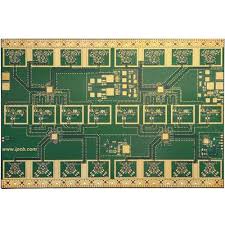
How do you ensure consistent thickness in hdi pcb manufacturer?
Moreover, HDI PCB manufacturers employ sequential lamination techniques to build up multiple layers of copper and substrate material while maintaining consistent thickness throughout the stack. Sequential lamination involves bonding together individual layers of material one at a time, allowing for precise control over layer thickness and alignment. This method ensures that each layer of the PCB contributes to the overall thickness in a controlled manner, resulting in a uniform and reliable final product.
In addition to fabrication techniques, HDI PCB manufacturers utilize advanced measurement and inspection tools to verify and validate thickness consistency throughout the manufacturing process. Automated optical inspection (AOI) systems, laser-based measurement devices, and precision calipers are used to monitor thickness at key stages of production, including after drilling, lamination, and final assembly. By conducting thorough measurements and inspections, manufacturers can identify and address any deviations from the desired thickness specifications promptly.
Furthermore, HDI PCB manufacturers implement strict quality control measures to ensure that each PCB meets the required thickness standards before being released for assembly or testing. This includes establishing tolerance limits for thickness variation and conducting statistical process control (SPC) to monitor thickness consistency over time. Any PCBs that fall outside of the acceptable thickness range are flagged for further investigation or rework to ensure compliance with quality standards.
Additionally, HDI PCB manufacturers may implement process controls and standard operating procedures (SOPs) to minimize variability and maintain consistency in thickness from batch to batch. This includes controlling environmental factors such as temperature, humidity, and pressure during fabrication, as well as implementing standardized operating parameters for equipment and processes. By following established procedures and maintaining tight process controls, manufacturers can achieve consistent thickness in HDI PCB manufacturing.
In conclusion, ensuring consistent thickness in HDI PCB manufacturing is essential for maintaining the integrity and performance of electronic devices. By carefully selecting quality materials, employing advanced fabrication techniques, conducting thorough measurements and inspections, and implementing strict quality control measures, manufacturers can achieve uniform thickness across the PCB and produce reliable, high-quality products. As electronic devices continue to evolve and demand for miniaturization and high-performance grows, the importance of consistent thickness in HDI PCB manufacturing will only continue to increase.