
 admin
admin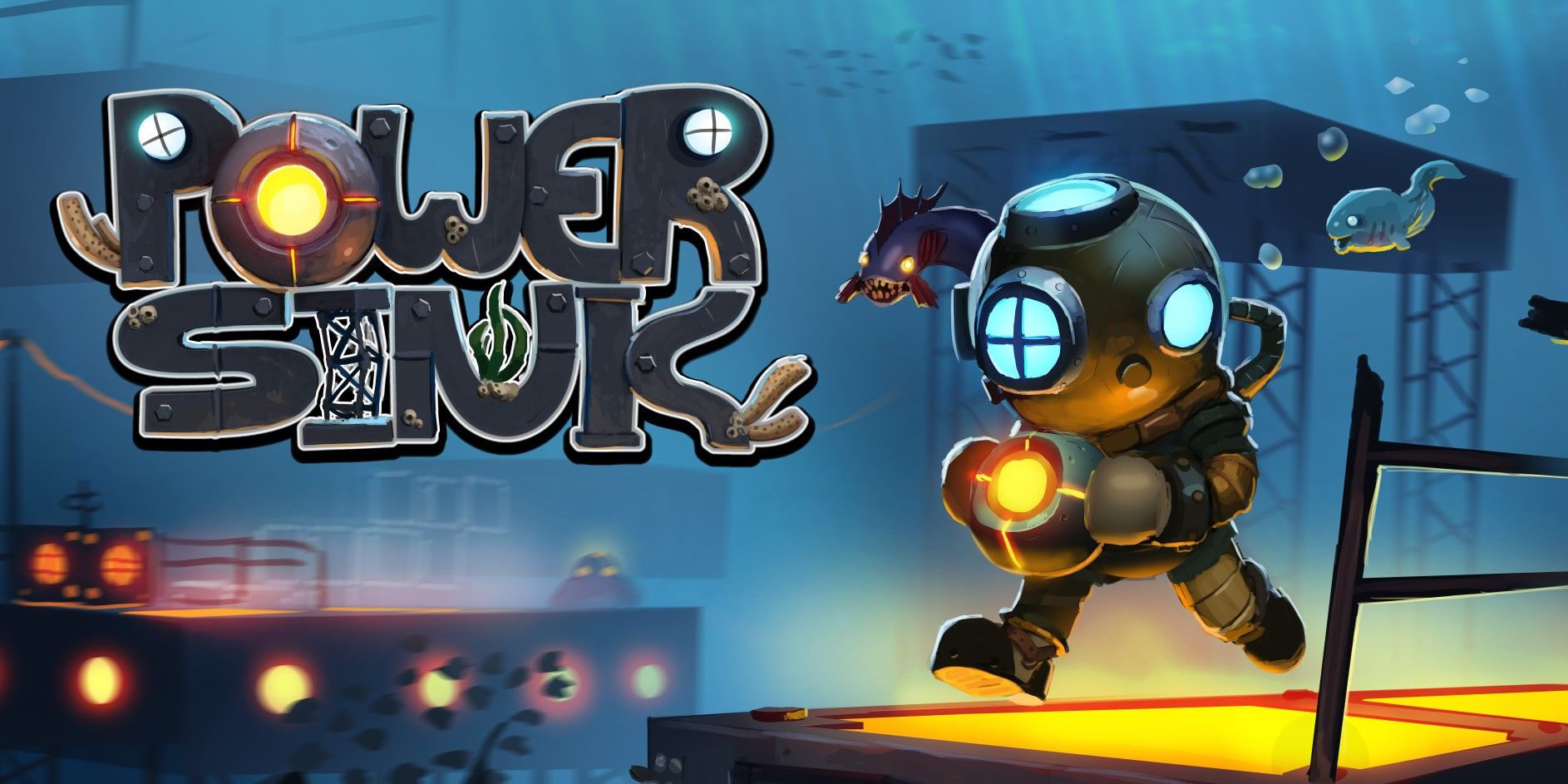
Power Sink, the debut game from Western Australia developer Winterwire Games, is a 3D puzzle-platformer set in the depths of the ocean.
You, an unnamed Diver, live and work in the Upper Biomes of the ocean. However, when the power shuts down, you find yourself as the wrong person in the right spot, leaving you to find a way to turn the power back on.
Alongside guidance from varied character archetypes like The Veteran and The Professor (who is currently inhabiting a fish’s body, even though he swears he’s not always been a fish), you must solve puzzles involving genre-favourite mechanics like switches and orbs.
As a fan of other puzzle-platformers like Portal and Viewfinder, I was excited to try one set in a biome that inspires awe to the level of the greatest puzzle: the ocean.
Given how little we know about our own ocean, it seemed like the perfect place to set a mystery and get some really ‘out there’ puzzles. Did this happen? Let’s dive in and see.
Puzzle It Out, Or Just Prod Until You Pass
Skewing much more heavily on the puzzle element of the puzzle-platformer, the game quickly sets up a routine for you — a new mechanic is introduced with the new biome, its difficulty and complexity are increased until you reach the final level.
Then you move on to the next biome and mechanic, with previous mechanics getting added back in as you progress to end up with a complex and what should have been satisfying puzzle to complete.
Unfortunately, the game often devolves into frustration due to a few reasons, the first being unclear mechanics – the Buoy Orb being able to connect to Power Orbs to make them float up, for example, I took it to be a bug the first few times I had it happen.
Secondly, it can be difficult to keep track of what needs to be powered on and left on for the final tower to light up – some innocuous switch from the beginning of the level might scupper your attempt if you didn’t leave it on, forcing you to travel back.
The camera doesn’t always help, with you sometimes getting stuck not being able to see the ceilings of certain platforms where orb holes are, until you move to a better spot, or a wall is simply too large to see all of it at once.
Unfortunately, the game often devolves into frustration.
A button to highlight the towers you need to light up, rather than having to follow the wires to figure out where you need to power, or a scout mode to allow you to scout ahead without needing to worry about falling blocks or mistiming a jump would be great. And who doesn’t love a little robot helper?
Sometimes, especially when orbs start having to be sent out of reach for retrieval from your character, you will have to restart the level completely because you placed the orbs in the wrong order, causing a soft lock.
It can be quite demoralising to have to restart a level in its entirety, especially if you can’t be certain how you got to the point you were at in the first place.
Bugs Even Down Here

Finally, you might need to restart due to one of the numerous bugs. I’ve found myself stuck on the ceiling or a piece of decoration in the depths when you fall, causing the Diver not to be able to move.
Now, given the levels aren’t hugely long and become a lot quicker once you figure out what you need to do, this isn’t rage-quitting levels of annoyance, but they’re still not fun to run into.
I know I had to take breaks to avoid cursing my screen at least a couple of times after getting stuck due to a soft-lock or a bug.
The writing is consistently good, and the central mystery is drip-fed at a nice pace.
Another bug I had consistently was trying to select a level on the 4th biome. The game just refused to allow me to press one of them and load the level. Instead, I needed to enter mouse controls and exit manually for it to load.
Given the game is insistent on you playing with a controller from the beginning, this wasn’t my first idea, having me try other levels and reload the game first, elevating my frustrations.
It’s something that I would have thought would have come up in testing the game, as it was very easy to replicate. Hopefully, it will be patched soon, but otherwise, at least there’s a workaround.
Strong Writing And Humour

This isn’t to say there aren’t glimmers of a good time in the game. The writing is consistently good – while there’s only a bit of text at the beginning and end of most levels, it fleshes out the other characters well and offers nice bits of comedy that had me chuckling.
The central mystery is drip-fed at a nice pace, leaving just enough mystery for me to want to play the next level to see what happens.
Unfortunately, bugs start to appear here as well, with one exposition story sharing the end of the story first and then starting from the beginning again on the next level!
Very much a case of déjà vu when this happened, leaving me questioning if we were suddenly entering a psychological thriller like Memento.
I started to encounter more bugs as I got further into the game, and it definitely felt like the game was starting to feel stretched about halfway through, be it due to time, finances, or the team’s expertise.
Is That A T-Posing Whale?

The graphics are nice enough, although I had to run it on low graphics settings to keep a stable framerate on my Nvidia 2060 Super, something which I wasn’t expecting – I can run Cyberpunk 2077 with ray tracing quite comfortably.
The graphics don’t particularly decrease visually between the three options, however, so it was an easy choice to make to keep the framerate stable.
Yet another small issue, which culminates in frustration, is the fact that my choice of resolution refused to stay saved – every time I entered the next level, it would revert to the default of 720p.
Now, I’m not sure if amending it even does anything – I couldn’t notice any visual difference, but it would be nice if there was a save and apply button on the settings, so I know it is definitely saving.
The third biome, Starry Expanse, in particular, is lovely, showing a sea full of stars.
A couple more options to amend the graphics to suit my setup would be nice as well – brightness, gamma, v-sync, etc. are all absent from the settings, as is the ability to amend your key bindings.
Brightness, especially, would be welcome, as when you get deeper into the ocean, the loss of light can make it difficult to see if you’re playing in the daytime.
The biome changes give a good indication of you getting deeper into the ocean, with light slowly disappearing and a general feeling of isolation. The third biome, Starry Expanse, in particular, is lovely, showing a sea full of stars.
This does something to relieve the claustrophobia until you’re in the Abyssal Chasm in the next biome.
Now, I’m not sure if I count this as a negative or positive, but one of the assets used to showcase the ocean is a whale standing up straight in the ocean, in what looks like a cosmic horror T-Pose. I found it funny, but not too sure why it’s there.
Music And Platforming: A Hit And A Miss

The music is a highlight, with an atmospheric soundscape which really adds to the idea of being 20,000 leagues under the sea.
Not necessarily one I’d be humming along to like some iconic tracks, but definitely enough to keep the music on as you work out a puzzle.
As it stands, the game is at an awkward midpoint whereby the style and substance cancel each other out.
The platforming is very much secondary, with only a handful of levels offering anything in the way of a challenge with floating or disappearing platforms. However, the game does take the physics of being in the ocean seriously.
By this, I mean the platforming is incredibly floaty, meaning that if you’re trying to judge jumping over to a moving platform, you’ll often miss it. This is especially true when you start playing with the Buoy Orb, causing a larger jump to take place.
I understand the desire to have the game take place in the ocean, given its atmosphere, but if that is to take precedent over the ease of gameplay, then I think it should have been amended in testing.
Or it needed to go further, and take inspiration from Outer Wilds. Start playing with physics from water pressure, to objects floating depending on buoyancy to make the atmosphere part of the game.
As it stands, the game is at an awkward midpoint whereby the style and substance cancel each other out.
There’s nothing in the way of collectibles in the game, so all the levels have one mandatory challenge, and that’s it.
You should also take into account that moving while getting fired from an air vent or travelator beam both affect the end result.
For an air vent, you need to keep moving while getting fired to increase the distance travelled, with some platforms only being reached by doing this.
For a travelator beam, you actually slow down if you keep moving, so you should stop moving to keep moving. Got it?
Platforming Staples

For the sequence breakers among us, there are not a huge number of opportunities in the early game.
However, once you get the travelator beams and the Buoy Orb, suddenly the options open up, and you can skip past certain bits of the level with correctly timed jumps or following the Orb where you’re not meant to go.
Of course, you do have to make sure you still press the levers or place the orbs in the right order to clear the level, but still, sometimes it’s nice to feel like you’ve gotten a one-up on the game.
There’s nothing in the way of collectibles in the game, so all the levels have the one mandatory challenge, and that’s it. Now, I’m not one to say that collectibles need to be in every game. Heck, they often just cause too much clutter.
However, having an extra challenge based more on platforming could be nice for each level, and it could reward you with some extra lore surrounding the world and its inhabitants, especially as the bits we do get are quite interesting.
Currently, the game isn’t compatible with Steam Cloud saves or the Steam Deck, where it transfers to touchscreen-only controls. Hopefully this will be fixed, as it would be a good game to play on the go and complete a level here or there while travelling.
Closing Thoughts:
Overall, if the main objective of a puzzle game is to provide you with ‘eureka’ moments as you work out the puzzle, this game succeeds about 50% of the time. Other times, I’ll complete a level, still not entirely sure how I did, or having to have a break from the next level, as I don’t want to do the manual scout work at the beginning of the level in order to get my bearings. There are moments of a good game here, but it’s all underneath a frustrating layer of bugs, mediocre puzzles, and design choices that I would have taken another look at during testing.

Power Sink
Reviewed on PC


- Released
-
May 22, 2025
- ESRB
-
Everyone
- Developer(s)
-
Winterwire Games
- Publisher(s)
-
Winterwire Games
- Engine
-
Unity
- Number of Players
-
Single-player
- Consistently great writing and humour
- Some nice biomes, especially Starry Expanse
- Nice, atmospheric music and soundscape
- Bugs are relatively frequent, including some which can soft-lock you
- Lack of eureka moments to the puzzles – difficult to follow the through line of the puzzle
- Some mechanics are obtuse and not explained
- Floaty platforming makes navigating moving platforms difficult
