
 admin
importance of impedance control in flex circuit
When high-speed signals travel down a flex circuit, they expect to see a consistent characteristic impedance that prevents reflections and delays. Disruptions in this impedance can cause signal interference, slow rise times, and even failure of critical circuit functions. This is why it’s so important to control impedance.
Impedance control is a major concern for any circuit board, but it becomes a critical requirement for flex and rigid-flex PCB designs due to their unique construction. These designs must be able to withstand a variety of physical forces and maintain their characteristics in the face of bending and vibrations.
Impedance control in flex PCBs is achieved through careful design and selection of materials and construction techniques. The goal is to achieve a high-quality product that will perform reliably over its lifetime of use. This requires a detailed understanding of the factors that influence impedance and how they vary as a flex circuit bends or vibrates.
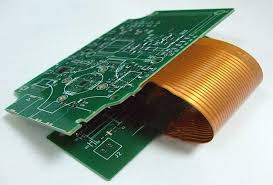
What is the importance of impedance control in flex circuit?
Achieving controlled impedance in a flex circuit begins with selecting the proper laminate materials for the project. This includes the dielectric thickness and the copper layer weight. Adding extra layers to a flex circuit increases the thickness, which in turn reduces its flexibility. The layer count also influences the impedance by affecting the signal to ground capacitance.
As a rule, higher layer counts are accompanied by higher impedance. However, the exact value depends on many other factors that need to be considered and optimized. The choice of a flex material is the most critical step in designing a flex circuit with good impedance control. Polyimide flex laminates are highly recommended for these applications as they are very stable and have a low dielectric constant. This helps to minimize losses in the flex circuit’s high-frequency transmission lines.
Another factor that impacts flex circuit impedance is the presence of solder masks and their proximity to traces. Variations in solder mask thickness can affect the capacitance between traces and ground, which can significantly impact the circuit’s impedance. This is why it’s important to ensure consistency in the solder mask and tight process controls.
Impedance control also requires the flex core to be thicker than standard. This is because the flex core must be thick enough to support the copper layers and their associated reference planes. A typical flex core is 1 OZ copper, but to achieve the required impedance the core must be significantly thicker. The additional core thickness also increases the overall flex circuit thickness.
In addition to the additional flex core thickness, impedance-controlled flex designs also require tightly controlled line widths and spacing. Typically, these are microstrips or stripline configurations. The latter is more challenging to implement in flex circuits as it requires a ground layer above and below the signal trace. This requires a double-sided flex core and greatly limits the flex circuit’s bend capabilities. This configuration is usually used in high-speed differential pairs that require a large number of signals to be transferred.
