
 admin
Factors Impact Flex Circuit Board Manufacturers Operatability
Unlike rigid PCBs, flex circuit boards deliver a significant weight reduction, reducing the overall size and cost of electronic devices. Besides this, their flexibility allows them to withstand multiple mechanical stresses without causing the circuit board to fail or lose functionality. Nevertheless, the performance of flexible circuit boards can be affected by external factors. This includes environmental conditions, assembly and storage processes, as well as the type of components used on a flex circuit board. Understanding what environmental factors impact a flex circuit board manufacturers operability is important to ensuring quality and reliability.
Environmental conditions impacting a flex circuit board manufacturers operability include temperature, humidity, chemical exposure and physical force. The occurrence of any of these factors can affect the stability and durability of a flex circuit board, especially if the PCB is exposed to excessive strain or pressure for an extended period of time. For instance, temperature changes can cause the substrate to expand and contract, resulting in a disconnected circuit due to the gap between copper conductors and the substrate. High levels of humidity can also lead to oxidation, which causes the circuit board to lose its integrity and short out.
Vibration is another factor that can have a negative impact on the operation of a flex circuit board. Although the bending nature of these boards helps to reduce the effects of vibration, the components on the PCB must be designed with anti-vibration and shock resistance capabilities. This helps to ensure that the electrical connections are not disrupted, and the PCB can continue to function reliably.
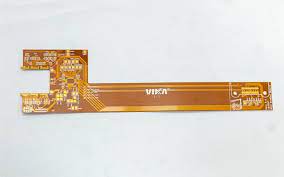
What Environmental Factors Impact Flex Circuit Board Manufacturers Operatability?
Other environmental conditions that can affect a flex circuit board manufacturers operability are power surges, lightning strikes and contamination from metallic dust. These factors can damage the conductive materials, resulting in malfunctions and failures of the flex circuit board. Additionally, a faulty PCB may suffer from a power outage, which can be disastrous to the device that it is attached to.
Another common issue that can occur with a flex circuit board is damage to the copper traces. This can result from the improper design of the circuit board, or due to a poor assembly process. Conductors should be routed perpendicular to the neutral bend axis to eliminate stress points that can damage copper circuits. Also, the traces should be staggered on multi-layered PCBs to prevent I-beaming that can cause trace breakage.
A thorough flex circuit board design validation testing program is essential for identifying issues that can compromise the performance of a flex circuit board. This can include assessing material selection for optimal mechanical flexibility, layer configuration compliance and bend radius optimization, and impedance control verification. Incorporating these tests into the manufacturing process enables manufacturers to identify issues with the design and production processes, preventing them from negatively impacting the functionality of the final product.
