
 admin
flexible printed circuit manufacturers manage bending
Flexible Printed Circuits (FPCs) are unique in their ability to bend and flex while maintaining electrical connectivity, making them ideal for applications where space is limited or flexibility is required. These circuits are integral to devices like smartphones, wearables, automotive electronics, and medical devices, which demand both compactness and durability. However, the ability to bend introduces a range of challenges for manufacturers, including maintaining electrical integrity, ensuring longevity, and preventing physical damage. To address these challenges, FPC manufacturers employ a variety of strategies to manage bending effectively throughout the design, manufacturing, and testing processes.
The first step in managing bending in flexible printed circuit manufacturers is the selection of materials. Traditional printed circuit boards (PCBs) are rigid, but flexible circuits are made using materials that allow for flexibility without compromising their electrical functionality. The primary material used for FPCs is polyimide or polyester film, both of which have excellent flexibility, high thermal stability, and low moisture absorption. These materials are strong enough to withstand repeated bending without cracking or degrading, yet they remain lightweight and thin, contributing to the overall flexibility of the circuit.
One of the most crucial factors in ensuring the durability of FPCs under bending is the design of the conductive traces. In rigid PCBs, traces are typically designed to be as wide and thick as possible to handle high currents, but in FPCs, flexibility must be prioritized. Manufacturers use thin copper foil for the conductive traces in FPCs, which can be etched to create the desired trace pattern. However, the trace width and thickness must be carefully considered to avoid breaking or cracking during bending. Typically, the copper used for flexible circuits is thinner than that used in rigid PCBs, and the traces are often designed to be narrower, which helps maintain flexibility while still allowing for the efficient transmission of electrical signals.
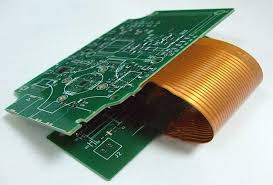
How do flexible printed circuit manufacturers manage bending?
The design also incorporates considerations for the bending radius of the FPC. The minimum bending radius refers to the smallest curve the circuit can be bent around without causing damage, and this radius is influenced by factors like the thickness of the material and the size of the copper traces. Manufacturers ensure that the FPC is designed with sufficient flexibility by calculating the appropriate bending radius and ensuring that the circuit’s geometry and materials are suitable for the required bending motion. In some cases, manufacturers also include reinforcement layers in the design, which can add mechanical strength in areas of high stress while still allowing for flexibility in other parts of the circuit.
Another essential aspect of bending management in FPCs is the integration of stress relief mechanisms. Repeated bending can introduce mechanical stress, which may lead to fatigue, cracks, or delamination of the copper traces from the substrate. To mitigate this risk, FPC manufacturers employ techniques like using flexible adhesive bonding or encapsulation materials that protect the copper traces and provide additional mechanical strength. These bonding agents are specifically designed to withstand the stress of bending, ensuring that the adhesive layer does not break down or lose its strength after repeated flexing.
Additionally, the use of multi-layer designs can be helpful in managing bending. Multi-layer flexible circuits have layers of conductive material sandwiched between insulating layers, allowing for more complex circuit designs without sacrificing flexibility. These designs can be particularly useful in applications where high-density circuits are required, and they can help distribute the mechanical stress more evenly across the surface of the circuit, reducing the risk of damage.
During manufacturing, FPCs undergo rigorous testing to assess their ability to withstand bending and flexing without failure. One common test is the bend test, where the circuit is repeatedly bent back and forth to ensure it maintains electrical functionality and mechanical integrity. The circuit’s ability to survive thousands or even millions of bending cycles is critical, especially for applications such as wearables, which are exposed to continuous movement. These tests help manufacturers identify weak points in the design or materials and ensure that the final product will perform reliably over its expected lifespan.
Finally, environmental considerations play a role in how FPCs are managed during bending. FPCs used in extreme conditions, such as high temperatures or harsh environments, must be designed to maintain flexibility without losing functionality. For example, high-temperature polyimide films can be used to ensure that the FPC remains flexible and stable in environments with temperature fluctuations. Additionally, the circuit may undergo thermal cycling tests to simulate real-world conditions where bending and temperature changes occur simultaneously.
In conclusion, managing bending in Flexible Printed Circuits requires a multi-faceted approach, focusing on material selection, design considerations, stress relief, testing, and environmental factors. By carefully controlling these elements, manufacturers can create FPCs that retain their functionality and durability even under constant bending and flexing, enabling them to meet the demanding requirements of modern electronic devices. With advances in materials and manufacturing techniques, FPC manufacturers continue to push the boundaries of flexibility while ensuring that the circuits are reliable and long-lasting.
